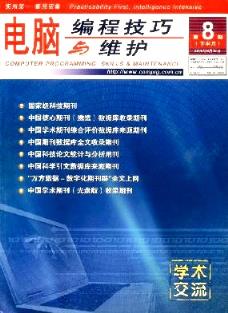
As an author who has submitted a manuscript to a professional publication like "Computer Programming Skills & Maintenance" (Issue 13, 2008), receiving peer review comments in English can be both a critical learning opportunity and a challenging task. Peer review is the cornerstone of academic and technical publishing, ensuring the quality, originality, and clarity of the work presented. This guide aims to help you understand, interpret, and effectively respond to typical English-language review comments for a computer programming article.
1. Understanding the Structure of Review Comments
Review comments are usually categorized. Common categories include:
- Major Issues: These are substantial concerns that must be addressed before publication. Examples might be: "The central algorithm is not compared with any existing state-of-the-art methods," or "The experimental setup lacks sufficient detail for reproducibility."
- Minor Issues: These are smaller corrections or suggestions for improvement. Examples: "Figure 3 is mislabeled," "Please define the acronym 'XYZ' on its first use," or "The conclusion section could be strengthened by linking back to the introduction."
- General Comments: These provide an overall assessment of the paper's contribution, novelty, and suitability for the journal's audience.
2. Common Themes in Programming Article Reviews
Based on the focus of your target journal, reviewers often comment on:
- Technical Correctness & Innovation: Is the code logic sound? Does the proposed technique or solution offer a genuine improvement over existing methods? A comment might be: "The time complexity analysis is incomplete. Please provide a Big-O notation comparison with Algorithm A from Reference [5]."
- Clarity of Explanation: Programming concepts can be dense. Reviewers assess if the explanation is accessible to the journal's readership. You might see: "The description of the recursive function on page 5 is confusing. Please consider adding a step-by-step trace with a small input example."
- Reproducibility & Evaluation: For empirical work, the review will scrutinize the experimental design. Comments could include: "The dataset used is not publicly available. Please specify how other researchers can replicate your results," or "The performance metrics are limited to execution time. Please include memory usage analysis."
- Code Presentation: If code snippets are included, their quality and formatting are evaluated. "The provided code snippet has inconsistent indentation, which harms readability," or "Consider adding more inline comments to explain the non-trivial sections of the code."
- Literature Review & Context: A strong paper must be situated within existing research. A typical note: "The related work section overlooks the seminal paper by Smith et al. (2007) on a similar topic. Please discuss how your approach differs."
3. How to Craft a Professional Response
Your response to the editor and reviewers is crucial. Follow these steps:
- Acknowledge and Thank: Begin by thanking the reviewers for their time and insightful comments.
- Be Systematic: Address every comment point-by-point. Use a two-column table: one for the reviewer's comment, and one for your detailed response and the changes made.
- Be Clear and Specific: For each point, state exactly what change you made. Reference the revised manuscript by page and line number. For example: "Reviewer Comment: 'The abstract is too technical.' Our Response: We have revised the abstract to focus more on the practical application and benefit of the technique. See Page 1, lines 5-10 in the revised manuscript."
- Justify Disagreement Diplomatically: If you genuinely disagree with a suggestion, explain your reasoning politely and backed by evidence. "We appreciate the reviewer's suggestion to use Dataset Y. However, we chose Dataset X because it is the standard benchmark for this specific problem domain, allowing for direct comparison with prior works [2,4,7]. This is clarified on Page 6."
- Submit a Revised Manuscript: Along with your response letter, submit a clean copy of the revised manuscript, ideally with changes highlighted.
Conclusion
Receiving detailed peer review feedback is an integral part of contributing to the field of computer programming. Treating the comments not as criticism but as a collaborative effort to refine and strengthen your work is the mark of a professional researcher or practitioner. By carefully and respectfully engaging with the review process, you significantly increase the chances of your valuable insights on programming techniques and maintenance being accepted and appreciated by the wider community.